Examining interconnections between player demographics and feature preferences in digital casino ecosystems
Written by Vera Müller · Aug 18, 2026
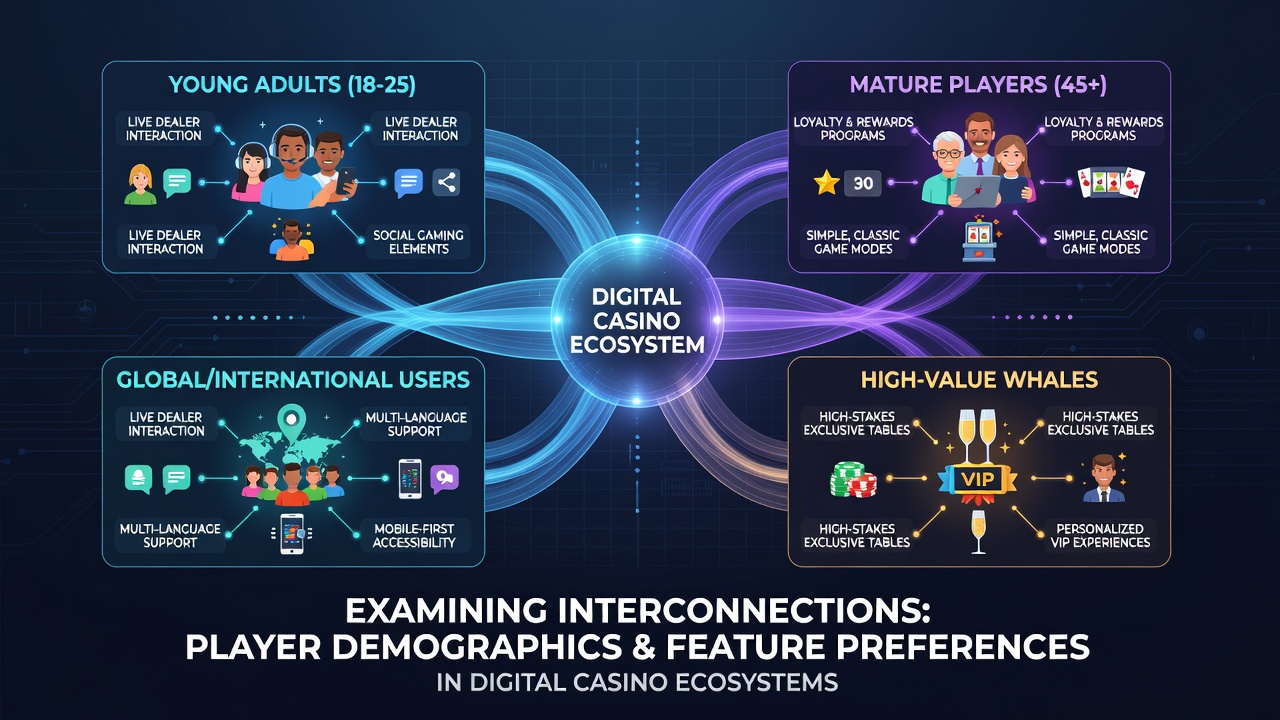
Examining interconnections between player demographics and feature preferences in digital casino ecosystems
Digital casino platforms collect extensive data on user interactions, and researchers continue to map how age, gender, location, and income levels connect with specific feature choices such as progressive jackpots, free spin mechanics, video poker variants, and mobile reward timers. Studies from multiple regions show clear correlations that operators use to adjust interface layouts and promotional timing.
Age groups demonstrate distinct patterns according to reports issued by the American Gaming Association. Players aged 18 to 34 gravitate toward fast-paced reel features with cascading symbols and short bonus rounds, while those aged 35 to 54 show stronger engagement with accumulating prize systems that span multiple sessions. Data from Nevada regulators in mid-2026 indicated that users over 55 logged longer average session times on video poker titles that include strategy elements and slower payout cycles.
Regional and platform variations
Location influences these preferences as well. Markets in North America and Australia display higher adoption of cross-device synchronization tools that carry reward progress between phones and tablets, whereas European user bases favor localized payment integrations and region-specific jackpot pools. A 2025 industry report from the University of Nevada, Reno linked these regional differences to regulatory environments that shape available features and marketing approaches.
Platform type adds another layer. Mobile-first applications record elevated interaction with touch-optimized video poker and instant-win mini-games, while desktop sessions lean toward complex slot configurations with multiple payline selections. August 2026 figures released by state gaming boards in New Jersey and Pennsylvania revealed that 62 percent of new mobile registrations originated from users under 40, and those accounts showed a 41 percent higher rate of selecting progressive jackpot titles within the first week.
Gender and income correlations
Gender distributions appear in several datasets. Female players register higher participation rates in slot formats that incorporate narrative themes and character progression, whereas male players allocate more playtime to poker-derived features and competitive leaderboard challenges. Income brackets further refine these trends, with higher-earning cohorts demonstrating preference for high-volatility games that require larger initial stakes.

Operators adjust feature visibility based on these observed connections. A single Australian regulatory summary from the Victorian Commission for Gambling and Liquor Regulation noted that targeted bonus offers aligned with demographic clusters produced measurable lifts in session frequency without altering overall spend patterns.
Behavioral data and interface design
Interface design elements interact with demographic signals in measurable ways. Color schemes and animation speeds tested across age segments produced different retention outcomes, and sound design choices influenced dwell time among users who favored accumulating prize mechanics. Cross-platform data synchronization features showed stronger uptake among players who maintained accounts across multiple devices, particularly those balancing work schedules with evening play windows.
Conversion metrics from practice modes to real-money play also vary by demographic. Younger cohorts convert at higher rates when introductory credits tie directly to popular reel features, while older segments respond more consistently to poker-format trials that highlight decision-making elements. These patterns hold across multiple platform providers operating in regulated markets during 2026.
Conclusion
The interconnections between player demographics and feature preferences continue to guide development priorities in digital casino ecosystems. Ongoing data collection from regulatory bodies and academic institutions supplies operators with evidence for refining personalization systems while maintaining compliance across jurisdictions. As platforms evolve, the documented relationships between user profiles and chosen mechanics remain central to understanding engagement trends.